
What Is Photophobia?
Photophobia is an abnormal sensitivity or intolerance to light. Despite its name, it is not a fear — it is a sensory experience in which normal levels of light cause discomfort, pain, or the urge to squint or close the eyes. It can range from mild (slight discomfort in bright sunlight) to severe (inability to tolerate even indoor lighting).
Significantly more common in people with dry eye disease, neurological disorders, and chronic pain syndromes.
The underlying mechanism involves the trigeminal nerve, which carries sensory information from the eye and face to the brain. In photophobia, this pathway becomes sensitised — meaning light stimuli that would normally be well-tolerated instead trigger a pain or discomfort response. Specialised light-sensitive retinal ganglion cells containing melanopsin contribute to this process, particularly in response to blue-wavelength light.
The Connection Between Photophobia and Dry Eye
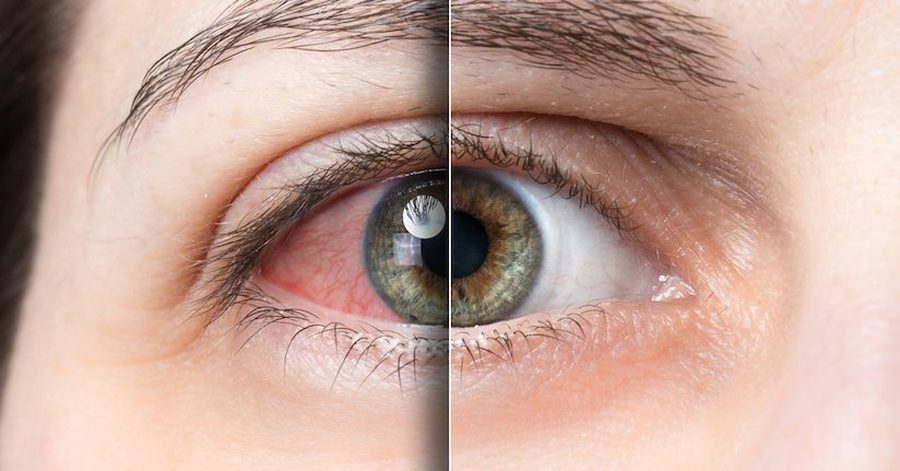
Dry eye disease disrupts the smooth tear film surface, causing light to scatter rather than refract cleanly — a key driver of photophobia.
Photophobia affects an estimated 40–70% of individuals with moderate-to-severe dry eye disease. The relationship is bidirectional and involves several overlapping mechanisms:
In dry eye disease, the corneal surface becomes irregularly hydrated as the tear film breaks up between blinks. These irregularities scatter incoming light rather than refracting it smoothly — creating glare and discomfort. Chronic inflammation then sensitises the corneal nerves, lowering their threshold for pain in response to light.
As these nerves become hypersensitive, even normal indoor lighting can trigger the trigeminal pain pathway. In advanced cases, persistent dry eye can lead to neuropathic pain — where the nerves themselves generate pain signals even without an obvious external stimulus. This explains why some dry eye patients experience severe photophobia that seems disproportionate to what's visible during examination.
Other Causes of Photophobia
-
Migraines & Headache Disorders
Affects up to 80% of migraine sufferers during an attack. The retina-trigeminal pathway becomes hyperexcitable, causing normal light to trigger or worsen head pain. Many migraine patients also have comorbid dry eye, creating a compounding effect.
-
Corneal Conditions
Corneal abrasions, keratitis, recurrent erosions, and corneal dystrophies expose the dense network of corneal nerve endings, leading to pain and light sensitivity. Post-surgical patients (LASIK, PRK, corneal transplant) may experience temporary or prolonged photophobia as nerves heal.
-
Uveitis & Intraocular Inflammation
Inflammation of the iris and ciliary body causes ciliary spasm — pain when the pupil attempts to constrict in light. Anterior uveitis is one of the most important conditions to rule out when a patient presents with acute photophobia, as it requires prompt treatment.
-
Medications & Substances
Certain antibiotics (tetracycline, doxycycline), diuretics, and NSAIDs can increase light sensitivity. Pupil-dilating drops used during eye exams cause temporary photophobia lasting several hours.
-
Neurological Conditions
Traumatic brain injury, meningitis, subarachnoid haemorrhage, and trigeminal neuralgia can all cause photophobia. Post-concussion photophobia can persist for months or years and may require specialised neuro-optometric rehabilitation.
Recognising the Symptoms
Management Strategies
-
Treat the Underlying Condition First If dry eye is contributing, comprehensive treatment — anti-inflammatory drops, meibomian gland therapy, tear supplementation — can significantly reduce light sensitivity. For migraine-related photophobia, neurologist-guided prevention is essential.
-
FL-41 Tinted Lenses These rose-tinted lenses filter blue-green wavelengths (~480nm) most triggering for photophobia. Clinical studies show they reduce light sensitivity and migraine frequency. Avoid very dark sunglasses indoors — this causes dark adaptation and can worsen photophobia over time.
-
Environmental Modifications Replace harsh fluorescent lighting with warm-toned LEDs. Use screen brightness controls and blue-light filtering. Position your monitor to minimise window glare. Consider window tinting or light-filtering blinds for rooms with intense direct sunlight.
If you experience sudden onset of severe photophobia — especially with eye pain, redness, vision loss, headache, neck stiffness, or fever — seek medical attention promptly. These symptoms could indicate uveitis, meningitis, or acute angle-closure glaucoma.
When to See an Eye Care Professional
Consult an eye care professional if photophobia persists beyond a few days, interferes with daily activities, is accompanied by eye pain or vision changes, or if you have a known condition like dry eye disease that is not being adequately managed.
A comprehensive evaluation can identify or rule out ocular causes, and your provider can recommend treatment strategies tailored to your specific situation. Where a neurological cause is suspected, referral to a neurologist or neuro-ophthalmologist may be recommended.
Is dry eye driving your light sensitivity?
Find a CSI-powered clinic near you for a structured evaluation that identifies the root cause — not just the symptom.
Find a CSI Powered Clinic Near You →Not Sure If You Have Dry Eye?
Take the 2-Minute Dry Eye Assessment
Answer a few quick questions to understand your symptoms and get personalised guidance.
Start the Assessment →