Dry eye treatment has evolved significantly in recent years, moving well beyond simple artificial tears. Today, eye care professionals take a targeted, stepwise approach that addresses the specific underlying causes of each patient's dry eye — beginning with conservative measures and escalating based on response and disease severity.
At-Home Treatments

Purpose-designed heated eye masks maintain a consistent 40–45°C — more effective than warm washcloths that cool rapidly.
Warm Compresses
Applying sustained, moist heat to the closed eyelids for 10–15 minutes softens thickened meibomian gland secretions, allowing oils to flow more freely onto the tear film. Purpose-designed heated eye masks that maintain ~40–45°C are more effective than warm washcloths. Follow with gentle lid massage — pressing from the base of the eyelid toward the lid margin — to express the melted oils.
Best for: Evaporative dry eye / MGDLid Hygiene
Daily lid scrubs using commercially available lid wipes, diluted baby shampoo, or hypochlorous acid spray remove debris, bacteria, and biofilm from the lid margins. This reduces bacterial load and inflammation, improving meibomian gland function over time. Consistency is key — treat it like brushing your teeth.
Best for: Blepharitis / MGDOmega-3 Fatty Acid Supplements
EPA and DHA (found in fish oil) have anti-inflammatory properties that can benefit the ocular surface and improve meibomian gland secretion quality. Clinical studies show improvement in tear film stability over 2–3 months. Typical therapeutic dose: 2,000–3,000 mg combined EPA/DHA daily. Re-esterified triglyceride forms are better absorbed than ethyl ester formulations. Consult your physician before starting, especially if you take blood-thinning medications.
Best for: Evaporative dry eye / inflammationOver-the-Counter Products
Artificial Tears
The most commonly used dry eye treatment. Different formulations target different types of dry eye: lipid-containing drops for evaporative dry eye, hyaluronic acid-based drops for aqueous deficiency, and balanced electrolyte solutions for general use. Preservative-free formulations are recommended for patients using drops more than four times daily — preservatives like BAK can cause additional irritation with frequent use.
Best for: Mild-to-moderate symptomsGels & Ointments
Gel drops provide a thicker consistency that remains on the eye surface longer — useful before bedtime or in low-humidity environments. Ophthalmic ointments (typically petroleum-based) provide the longest-lasting protection and are ideal for nighttime use in patients who experience significant symptoms upon waking. Not recommended for daytime use as they temporarily blur vision.
Best for: Overnight relief / severe symptomsPrescription Treatments
Cyclosporine (Restasis, Cequa)
An immunomodulatory agent that reduces T-cell-mediated inflammation on the ocular surface and increases natural tear production over time. Takes 3–6 months to reach full therapeutic effect. Many patients experience transient burning or stinging during the first few weeks. Consistency of use is critical for success.
Best for: Inflammatory dry eyeLifitegrast (Xiidra)
An LFA-1 antagonist that blocks a key step in the inflammatory cascade. Unlike cyclosporine, lifitegrast can produce symptom improvement in as little as two weeks. The most common side effect is a temporary taste disturbance after instillation. Dosed twice daily and can be used alongside other dry eye treatments.
Best for: Inflammatory dry eyeShort-Term Corticosteroids
In acute dry eye flares with significant inflammation, a short course (2–4 weeks) of topical corticosteroids (loteprednol, fluorometholone) provides rapid anti-inflammatory relief. This can "break the cycle" of chronic inflammation, creating a window for longer-acting treatments to take effect. Long-term use is avoided due to risks of elevated intraocular pressure and cataract formation.
Best for: Acute flaresIn-Office Procedures
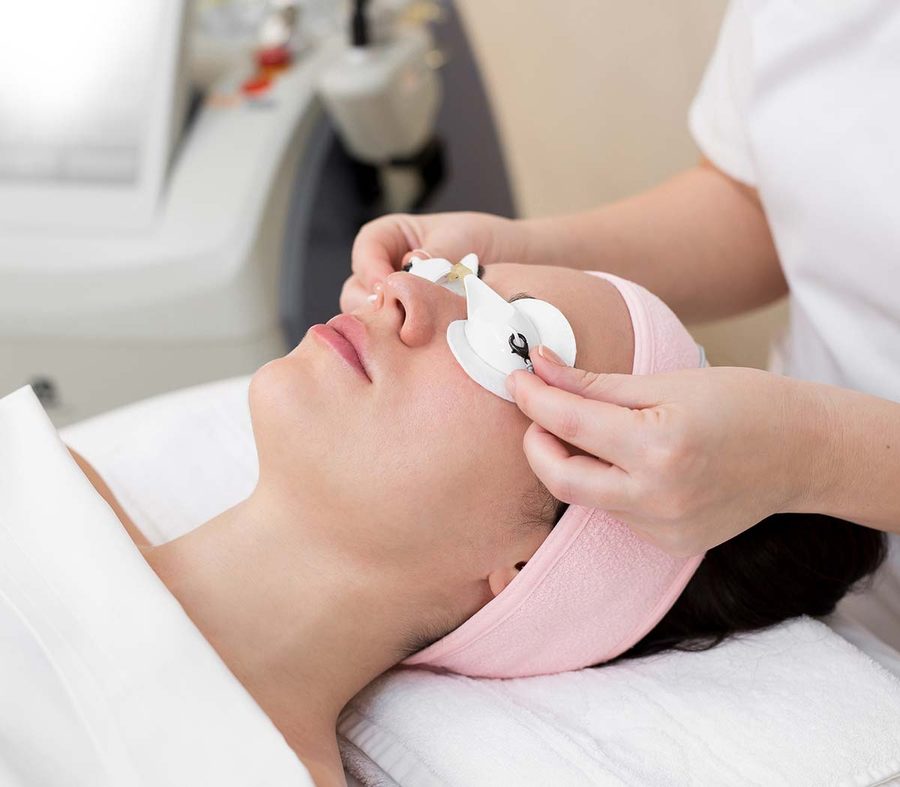
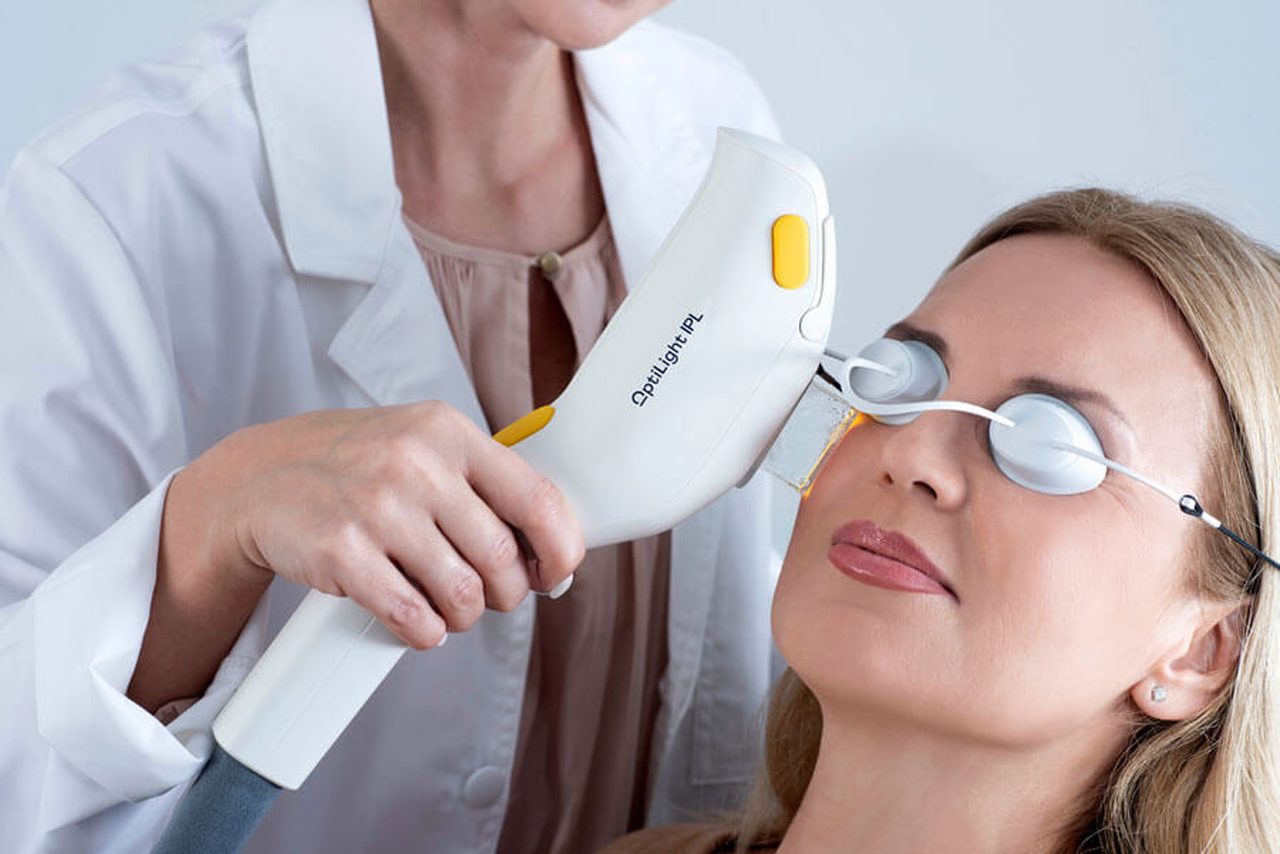
IPL therapy delivers controlled pulses of broad-spectrum light to reduce inflammation and clear blocked meibomian glands.
Intense Pulsed Light (IPL) Therapy
Originally developed for dermatological conditions, IPL has emerged as a highly effective treatment for evaporative dry eye and MGD. It reduces inflammation, eliminates abnormal blood vessels (telangiectasia) that perpetuate inflammation, and liquefies hardened meibomian gland secretions. A typical course involves 4 sessions spaced 2–4 weeks apart. Maintenance treatments every 6–12 months help sustain results.
Best for: Moderate-to-severe MGDLipiFlow Thermal Pulsation
An FDA-cleared device that combines precisely controlled heat and gentle pressure to evacuate blocked meibomian glands. The procedure takes ~12 minutes per eye. A single-use activator applies heat to the inner eyelid surface while simultaneously applying gentle, pulsatile pressure to the outer eyelid. Clinical studies show a single LipiFlow treatment can improve meibomian gland function and reduce dry eye symptoms for up to 12 months.
Best for: MGD / blocked glandsPunctal Plugs
Tiny biocompatible devices inserted into the tear drainage channels (puncta) to help retain natural tears on the ocular surface longer. Temporary collagen plugs dissolve within a few months and are often used as a trial before permanent silicone plugs. Particularly effective for aqueous-deficient dry eye and often combined with anti-inflammatory treatments.
Best for: Aqueous-deficient dry eyeAI-Powered Treatment Plans at CSI-Powered Clinics
CSI Dry Eye uses advanced AI to analyse each patient's unique combination of signs, symptoms, and diagnostic data — then generates a personalised, evidence-based treatment plan. This reduces trial-and-error and improves outcomes from the very first visit.
Lifestyle Modifications
Medical treatments work best when supported by consistent lifestyle adjustments:
- 20-20-20 rule — Every 20 minutes of screen time, look at something 20 feet away for 20 seconds to encourage complete blinking.
- Use a humidifier — Adding moisture to your environment, especially in winter or arid climates, slows tear evaporation.
- Lower your screen — Looking slightly downward narrows the eyelid opening, reducing the exposed ocular surface area.
- Wear wraparound sunglasses outdoors — Protects against wind, dust, and UV radiation, all of which exacerbate dry eye.
- Stay hydrated — Adequate systemic hydration supports overall tear production.
- Avoid direct airflow — Position car vents, fans, and AC units away from your face.
- Take blink breaks — Practice deliberate, complete blinks throughout the day, especially during prolonged screen use.
Not sure which treatment is right for you?
Find a CSI-powered clinic near you for a structured evaluation that identifies your dry eye subtype and builds a treatment plan matched to your specific condition.
Find a CSI Powered Clinic Near You →Not Sure If You Have Dry Eye?
Take the 2-Minute Dry Eye Assessment
Answer a few quick questions to understand your symptoms and get personalised guidance.
Start the Assessment →